Governance. Risk. Compliance. Cybersecurity.
AI Governance & Risk

GRC Strategy & Operating Model

One integrated control framework instead of duplicated audits.

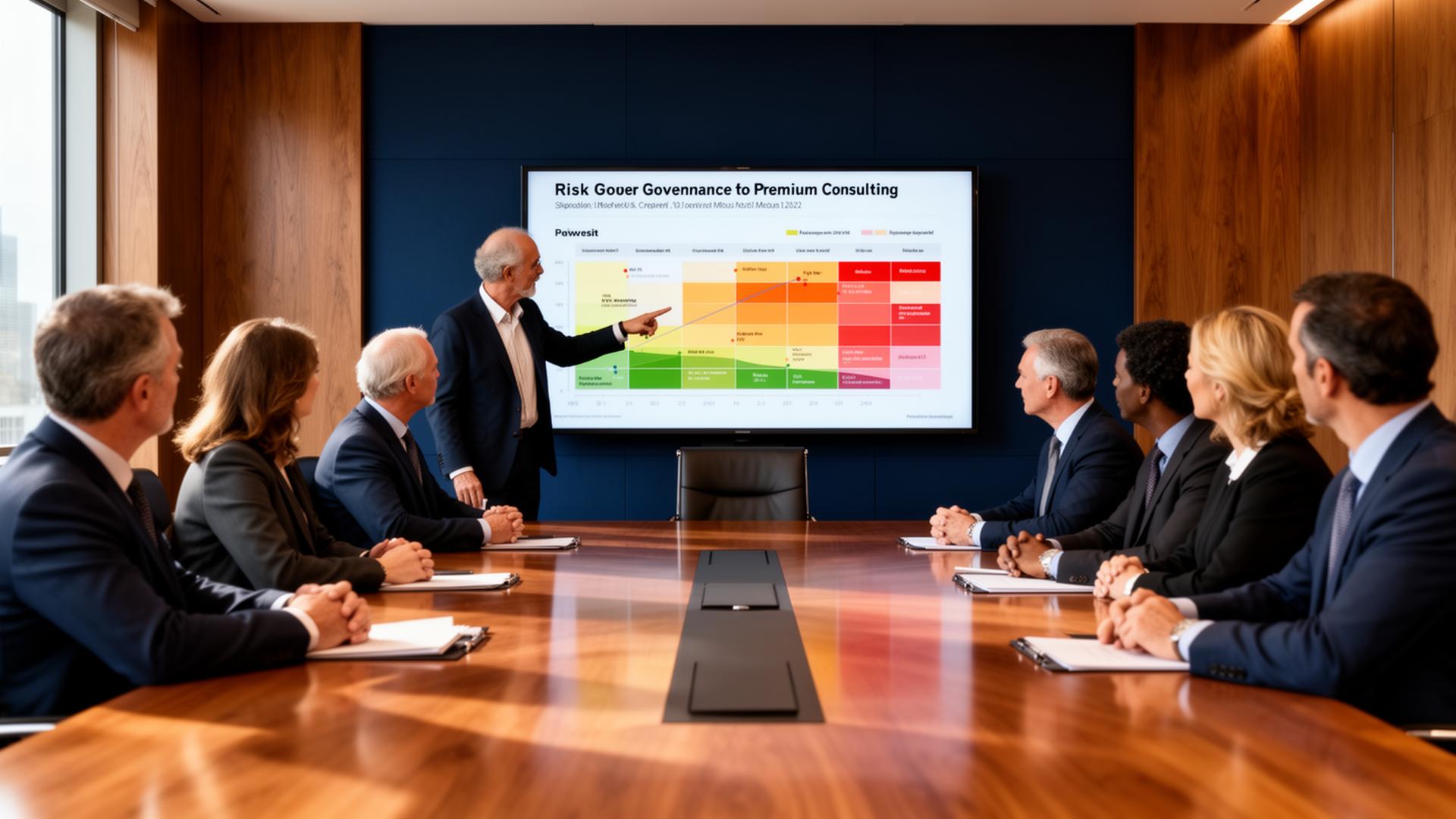
GRC Strategy & Operating Model — board governance meeting with a risk heat-map on screen, MAST Consulting Group

Overview

We rationalise overlapping ISO, PCI, SOC 2, NIST CSF, ADHICS and CBUAE obligations into a single control framework, mapped to a unified risk register and reported through one executive dashboard.

NJ
Lead partner for this service
Naval JadhavDirector — GRC & Compliance

Experienced governance, risk management, and compliance (GRC) leader with over 15 years of industry expertise. He heads deep-dive regulatory compliance, data privacy, and AI governance implementations at MAST Consulting.

In depth

A four-layer view of this service.

Context, scope, delivery and impact — written for buyers, boards, auditors and search engines alike.

Layer 01 — Context

Context & Why It Matters

01

Mid-size and large enterprises in regulated sectors typically face 6–15 simultaneous obligations — ISO 27001, SOC 2, PCI DSS, NIST CSF, plus CBUAE, SAMA, NCA, ADHICS, DESC, RBI, SEBI, GDPR and others.

  • Run as separate projects, these create duplicate controls, conflicting evidence formats, audit fatigue and unclear board reporting.
  • Integrated GRC consolidates the obligation set into a single control framework with one risk register and one evidence engine, dramatically reducing cost and confusion.
Layer 02 — Scope

Scope & What It Covers

02

Coverage includes obligation inventory and harmonisation, common control framework design (mapping to Secure Controls Framework, NIST CSF 2.0, ISO 27001 Annex A, COBIT 2019), enterprise risk taxonomy and appetite statements, three-lines model design, GRC platform selection and implementation (Archer, ServiceNow IRM/GRC, MetricStream, OneTrust, AuditBoard, Vanta, Drata), policy harmonisation, KRI/KPI library, and board and audit committee reporting design.

Layer 03 — Approach

Our Approach & Delivery

03

We start with a 4–6 week discovery — interviewing process owners, mapping controls, inventorying evidence and tooling — then design a unified framework that satisfies every in-scope obligation with the smallest possible control set.

  • Tooling is selected on objective criteria (TCO, integrations, regulator-fit, scalability) and rolled out alongside revised RACI, attestation cycles and reporting cadence.
  • Quarterly steering keeps the framework current as new regulations emerge.
Layer 04 — Impact

Business Impact & Outcomes

04

Typical outcomes: 30–40 percent reduction in audit effort, 50–70 percent fewer duplicated controls, a single board-level GRC dashboard, and a measurable improvement in audit findings closure rates.

  • Strategically, the executive team gains one defensible view of regulatory, technology, operational and third-party risk — replacing inconsistent spreadsheet returns with live data.
At a glance

Process flow, compliance checklist and benefits.

A visual breakdown of how the engagement runs, what evidence we leave behind, and the business outcomes you can defend at the board.

Process flow

How we deliver GRC Strategy & Operating Model.

  1. 01
    Discovery

    Inventory of obligations, controls, tools and owners.

  2. 02
    Framework Design

    Mapped control set with single-source evidence.

  3. 03
    Tooling

    GRC platform selection and rollout (Archer, ServiceNow, Vanta, Drata).

  4. 04
    Run

    Quarterly attestation and KRI reporting.

Compliance checklist

What auditors and regulators expect to see.

What a mature integrated GRC operating model looks like — what your board, auditors and regulators will test for.

  • Unified obligations register

    Every law, regulation, standard and contract mapped to owners and renewal dates.

  • Single control framework

    Rationalised controls covering ISO 27001, SOC 2, PCI DSS, NIST CSF, CBUAE, SAMA, ADHICS in one library.

  • Common risk taxonomy and appetite

    Board-approved appetite with quantified tolerances across IT, cyber, ops and compliance.

  • Three-lines model documented

    Roles of business, GRC function and internal audit clearly delineated and independent.

  • GRC tooling deployed

    Archer, ServiceNow GRC, Vanta or Drata configured against the unified framework.

  • Test-once, evidence-many pipeline

    Single evidence collection serving multiple audits and regulators.

  • Executive GRC dashboard

    Forward-looking KRIs, audit status and remediation reported quarterly to the board.

  • Annual GRC programme review

    Framework, tooling and operating model reviewed and tuned with regulator input.

Benefits

What you walk away with.

30 to 40 percent audit-fatigue reduction

Map once, evidence many — fewer duplicated audits and information requests.

Board-ready risk view

One dashboard replaces siloed reports from security, privacy, audit and compliance.

Faster regulator response

Pre-mapped evidence answers supervisory information requests in days, not weeks.

Lower tooling and audit spend

Consolidated GRC stack and combined assessments cut programme cost.

Scalable for new frameworks

Add ISO 42001, DORA or sector-specific regulations without rebuilding the spine.

Cultural shift to integrated risk

Risk and compliance treated as one capability, not competing functions.

FAQ

Frequently asked questions.

We already have ISO 27001 — why a GRC programme?+

ISO covers information security. A GRC programme integrates IT, operational, third-party, regulatory and emerging-tech risk into one view for the board.

How long does a GRC operating model take to stand up?+

Foundation (taxonomy, framework, tooling decision) takes 8 to 12 weeks. Full rollout including unified evidence collection and dashboards takes 6 to 9 months.

Which GRC platform should we use?+

Tool-agnostic. Archer and ServiceNow GRC suit large regulated enterprises; Vanta, Drata and Sprinto suit SaaS and mid-market; AuditBoard works well for audit-heavy environments. We help you choose and implement.

We have multiple risk registers — how do you reconcile them?+

We map every existing register into the new enterprise taxonomy, deduplicate and re-attribute ownership. Legacy registers retire as the unified register is approved.

What is the ROI of an integrated GRC programme?+

Typical outcomes: 30–40% audit-fatigue reduction, 25% tooling rationalisation, and meaningful avoidance of duplicated control work. We agree the success metrics up front.

Will this replace our internal audit function?+

No. GRC is the second line — it owns the framework, register and reporting. Internal audit (third line) provides independent assurance over both the first and second lines.

Can you support a single regulated entity inside a group?+

Yes. We routinely run group-level GRC programmes with entity-level scopes (banks, insurers, fintechs) feeding a common backbone.

Get started

Ready to scope your GRC Strategy & engagement?

Tell us a little about your business — a senior consultant will reach out within one business day.

By submitting you agree to be contacted by a MAST consultant. We never share your details.